Tuesday, 25 February 2014

HF Marker

A useful tool I built in 1999 is an “HF Marker”. This simple device produces a 10 MHz primary signal and lots of harmonics (even and odd). Two “divide by 10” IC’s (SN7490) produce 1 MHz and 100 kHz primary signals and also lots of harmonics. With this device you can calibrate frequency scales for example.


Harmonics that are available:


20, 30, 40, 50... MHz
2, 3, 4, 5 ... MHz

200, 300, 400, 500 ... kHz


A NE555 is used to produce a 1500 Hz tone that is “injected” via a 1N4148 into the modulator. You can here the tones with the receiver either selected to SSB or AM.


Friday, 21 February 2014

Late QSL from Chile

Sometimes QSL cards take a while before they arrive. Last week I received a card via the bureau from Fernando, CE3WR. 
The QSO was made in September 2005, more than 8 years ago !

The radiocontact was made on 14 MHz in PSK31 mode.
QTH from Fernando is Santiago, capital city of Chile


Connections with Chile are rare for me. This is only my second hardcopy QSL from CE. The other one was from CE3PG, Dino (July 2007, RTTY, 20 m)


Wednesday, 19 February 2014

Replica electric motor

One of my dad's hobbies was building small steam engines. In 1980 he built an engine that did not run on steam but electricity. It was a replica of the electric motor from Charles C. Page (1846). This engine mimics a steam engine with two pistons which have become electric coils.


This replica really works although the coils get very hot. I keep the replica safe on one of my shelves.


Thursday, 13 February 2014

PL519

Yesterday at the local club meeting of PI4RAZ a nice Power Amp was displayed.
Frank, PA3CNO, brought in a homebrewed Power Amplifier with PL519 tube designed for QRO use on the HF bands.

 
The DC Power Supply provides 1100 Vdc (loaded). The design is from Frits PA0FRI. With some minor modifications (change of input circuitry and ATU coil) Frank managed to get 150 Watts PEP (!) out of this rig. The PL519 tube was used in old TV sets and is still available at radio- and fleemarkets.
 
 
PSU, 1300Vdc unloaded, 1100Vdc loaded
 
 
Look for the QRO section on http://www.pa0fri.com/

Wednesday, 12 February 2014

Ecoclassic lights

As an alternative for the dissappeared (banned) glowbulbs (incandescent lights), Philips introduced the halogen Ecoclassic lights. Philips mounted a halogen light inside an ordinary glass bulb with E27 or E14 fittings. Halogen lights are substantially more energy
efficient than normal incandescent lights.


These days the Ecoclassic lights can be bought at most supermarkets. Because those lights do not emit EM waves in the radio frequency spectrum hams may consider introducing this type of lights in their shacks.
The Ecoclassic lights are appr. 30% more efficient than their incandescent counterparts. Also this type of light is dimmable. Of course there is a disadvantage. An avarage 80 Watts Ecoclassic bulb only lives for appr. 2000 hours according to the specs, however that seems to be too optimistic.
Bulbs with electrical power over 100 Watts are now available again (up till 200 Watts). I recently bought a 105 Watt EcoClassic light (comparable with 140 Watts incandescent light, 1980 lumen) for 3 euro at the local supermarket.


Thursday, 6 February 2014

New look QRZ logbook

Sometimes I use the logbook in QRZ.com. Not always, but when a station I worked does not have an eQSL account or when a special QSO needs to be remembered I enter the event in the QRZ logbook.
This week I saw the logbook has a new look. One improvement is the fact that the callsigns are easier to read.


Saturday, 1 February 2014

Guilty pleasure

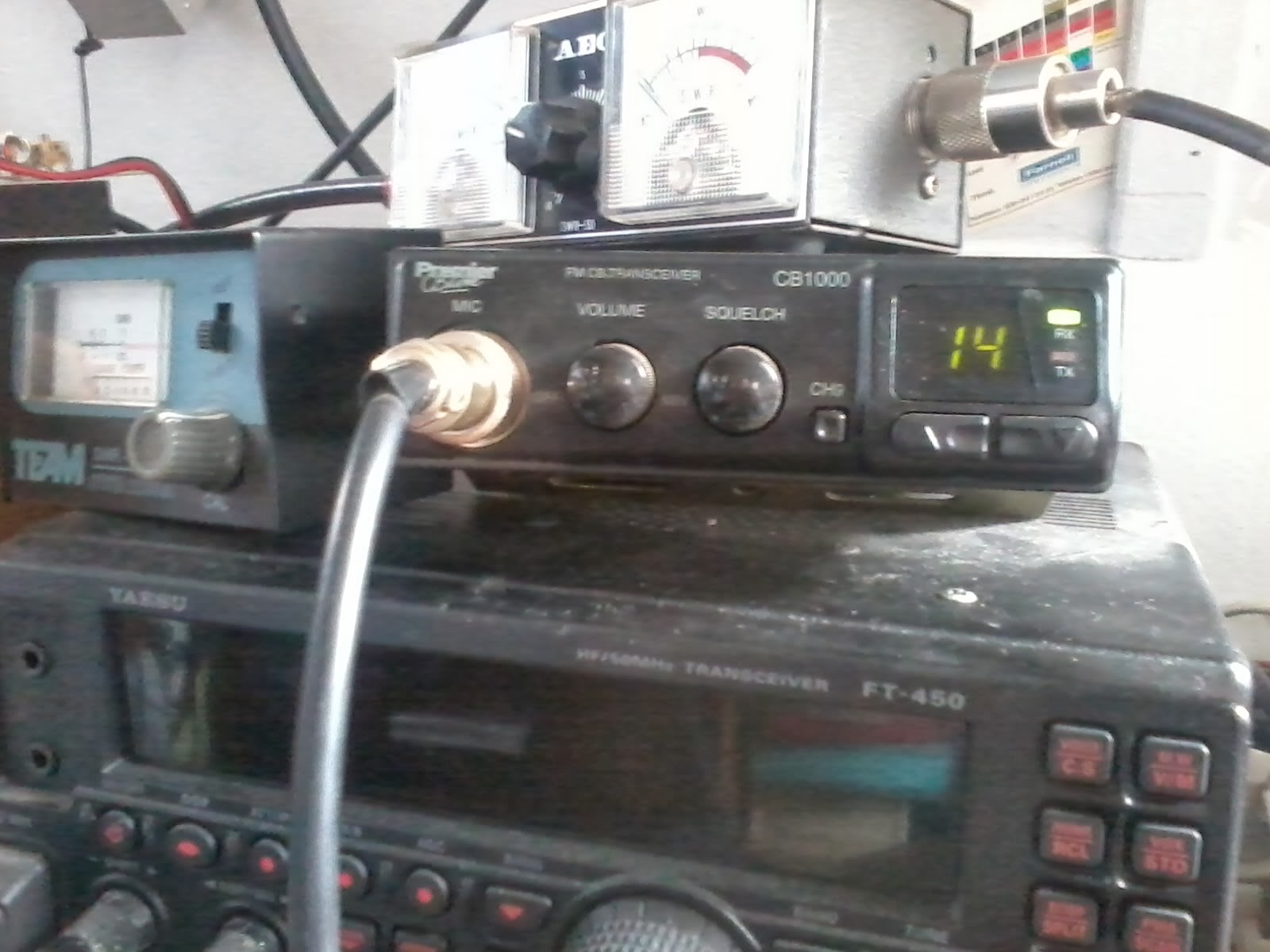
Lately a nice person said he had an old "bakkie" (27 MHz transceiver).
"That's interesting" I said, and in no time he handed me his Premier CB1000.
Of course I had to give live to this small rig. That was easy; a small amount of contact spray
and resoldering a mic connection made this old Citizen Band device work.


I connected the CB1000 to my G5RV jr antenna and tuned it with the ATU on 11m.
No big deal.
It was interesting to discover that there still is a lot activity on the citizenband in FM mode.
To my surprise I was able to make 2 local QSO's with the 4 Watt FM transmitter, which was a nice experience.

My latest CB activity was in 1978 (if I recall well) when I was 15 years old and still 
living in de Betuwe with my parents.

Maybe I can encourage somebody on channel 14,   27,125 MHz, to study for the N- or F- radio licence...

Thursday, 30 January 2014

IRF MOSFET characteristics

I have categorized the main characteristics of most used IRF N-channel MOSFETs for RF purposes.


The table below might be useful for you when you are looking for the proper FET in your
MF/HF end stage. 


FET             Id       Vds      Rds      Cin
                     A       V        ohm    pF
===================================
IRF510       5,6   100     0,54   200
IRF520       9,7   100     0,2     330
IRF530       14    100     0,14   600
IRF540       33    100     0,04   890
IRF610       3,3   200     1,5     200
IRF620       7      200     1,2     460
IRF630       9      200      0,3    960
IRF640       18    200     0,15  1850
IRF710        2     400     3,6     200
IRF730        7     400     1        620
IRF740       10    400    0,55   1400


IRFs ending with IRFx10 have the smallest input capacitance: 200 pF
Those FETs can be used in PA's with operation frequency up till 15 MHz.

For MG experiments (appr. 500 kHz) I have succesfully used the IRF520 and IRF620.
Both work fine on this low frequency.

Input capacitance is often specified at Vds=25V and Vgs=0V.

Note: I have used various internet sources that were sometime controdictionary.

Monday, 27 January 2014

Confirmation 10m FM QSO

John, EI2HM, from Tramore, Ireland has sent me an eQSL from a QSO in the summer of 2010.
This QSO was special since it was made in FM mode on 28 MHz. Propagation conditions must have been excellent since FM is not the easiest mode for long distance contacts.

eQSL
Tramore, South coast of Ireland
 

Sunday, 26 January 2014

Attic view, THz experiment

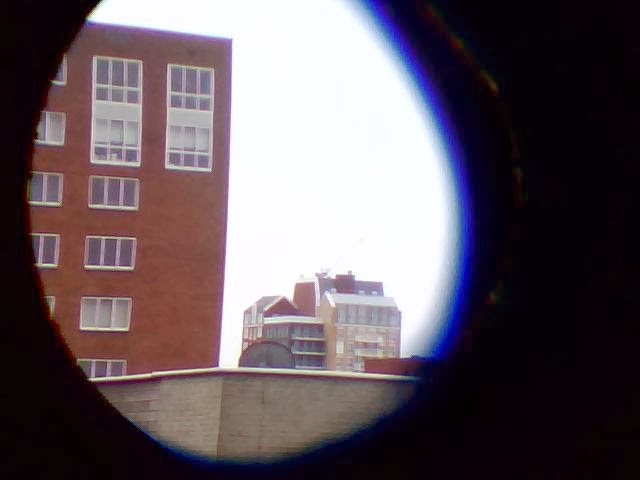
Just a simple optic experiment this afternoon (EM waves in frequency range of 430-790 THz); hooked up a binoculars to a low cost webcam.
This resulted in this view from my attic window:


Now more details (like the small segments in the windows) are visible that are not when glancing with the naked eye. A low budget 10 x 50 binoculars (from "Action" store) and a Trust Primo webcam were used. The webcam was applied onto the binoculars with ducttape.


Binoculars


Primo Trust Webcam

Next challenge will be to capture the moon with more visible details than with bare eyes. No radio licence required for those type of Extreme High Frequency experiments :-)